The Green Light? Decoding the CFTC’s Pivot on Prediction Markets
Chairman Selig just scrapped the ban on sports and election contracts. Here is what happens next for the prediction economy.

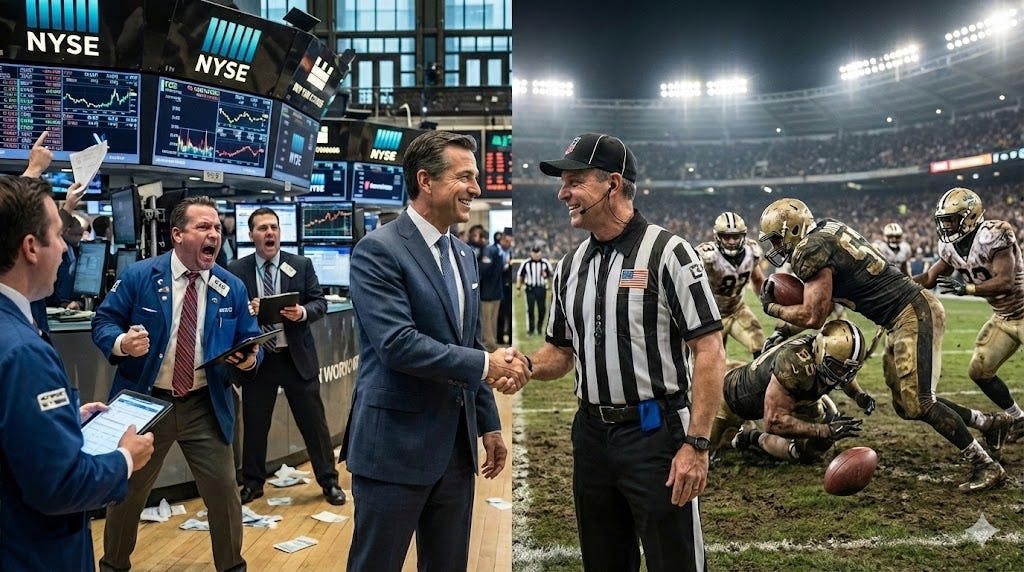
We are witnessing a regime change in how the U.S. government views the “future of truth.”
Yesterday, in his first major move as CFTC Chairman, Michael Selig dropped a regulatory hammer—but for once, it wasn’t aimed at the companies. It was aimed at the red tape.
In a meeting that will likely be cited in pitch decks for the next decade, Selig announced the withdrawal of the contentious 2024 proposal that sought to ban political and sports event contracts.
If you are building in this space (or trading in it), the ground just shifted beneath your feet. Here is the plain-English breakdown of what was said, and the three futures we might see next.
🏛️ The Breakdown: From “No” to “How?”
For the last few years, the CFTC’s stance on prediction markets (specifically regarding elections and sports) was effectively: “This looks like gambling, and we don’t do gambling.”
Chairman Selig’s remarks yesterday flipped that script. Here are the three key takeaways from his statement, translated from “Regulator Speak” to human:
1. The “Ban” is Dead
What he said: The CFTC is withdrawing the 2024 “Event Contracts” proposal and the 2025 Staff Advisory.
Translation: The previous administration’s attempt to blanket-ban betting on elections and sports derivatives is over. They are acknowledging that simply shouting “NO” hasn’t stopped the market from growing (see: Polymarket’s volume).
2. Ending the “No Man’s Land”
What he said: The current framework has “failed market participants” and created uncertainty.
Translation: Innovation is stuck in purgatory. Companies don’t know if they are a tech startup, a casino, or a financial exchange. Selig wants to end the ambiguity so companies can actually build without fear of a random subpoena.
3. “Lawful Innovation” is the New North Star
What he said: It is time for “clear standards” that support innovation.
Translation: We are going to regulate you, but we are going to give you a path to exist legally. This is a move away from enforcement (suing companies) toward rulemaking (writing a rulebook everyone can follow).
🔮 The Forecast: 3 Scenarios for Regulation
So, the ban is gone. But what replaces it? Here are the three scenarios for how the new “Event Contract” rules could take shape, ranging from a heavy hand to a light touch.
Scenario 1: The “Wall Street” Model (High Regulation)
The Vibe: Prediction markets become “Futures Lite.”
The Rules: To list a sports contract, you need full licensure (DCM). Strict Know-Your-Customer (KYC) checks are mandatory for every user (no anonymous wallets). High capital requirements for the platforms.
The Impact:
Winners: Kalshi and Crypto.com. They already have the licenses and the legal teams to handle this. They become the “New York Stock Exchange” of events.
Losers: Polymarket. If strict KYC is enforced at the protocol level, their decentralized, open-access model hits a brick wall in the US.
New Players: Harder for startups like Opinion.xyz to launch without raising massive VC rounds to pay for compliance.
Scenario 2: The “Sandbox” Model (Medium Regulation)
The Vibe: Innovation first, safety second.
The Rules: The CFTC creates a new, specific license for “Event Exchanges” that is easier to get than a full futures exchange license. Limits are placed on how much an individual can wager (e.g., $5k caps) to differentiate it from high-stakes gambling, but onboarding is frictionless.
The Impact:
Winners: Prediction Startups and Opinion.xyz. This is the “Goldilocks” zone where agile startups can compete with incumbents.
The Shift: Kalshi expands aggressively into niche sports. Polymarket might explore a “US-Compliance Layer” to officially enter the market while keeping their offshore protocol wild.
Scenario 3: The “Preemption” Play (Low Regulation / Federal Dominance)
The Vibe: The Feds big-foot the States.
The Rules: The CFTC declares that anything traded as a derivative is their jurisdiction, effectively telling state gaming commissions (who hate prediction markets) to back off. Rules focus only on preventing manipulation (e.g., fixing a game), not on restricting access.
The Impact:
Winners: Everyone. This is the “Wild West” with a sheriff who only shoots at cheaters.
The Risk: This triggers a massive legal war with State Attorneys General who want to protect their local sports betting tax revenue.
🏁 The Bottom Line
Chairman Selig just signaled that the U.S. government is done fighting the concept of prediction markets. They are now interested in owning the oversight of them.
For the Big Dogs (Kalshi, Crypto.com): The path to becoming the “NASDAQ of Culture” just cleared up. Expect them to launch aggressive sports products immediately.
For the DeFi Giants (Polymarket): The pressure is on. If a legal path exists in the US, staying offshore becomes a competitive disadvantage.
For the Upstarts (Startups, Opinion.xyz): This is your window. The “Ban” risk is gone; now it’s a race to see who can build the best product under the new rules.
The takeaway: Prediction markets just graduated from “Grey Market Novelty” to “Asset Class.” Trade accordingly.